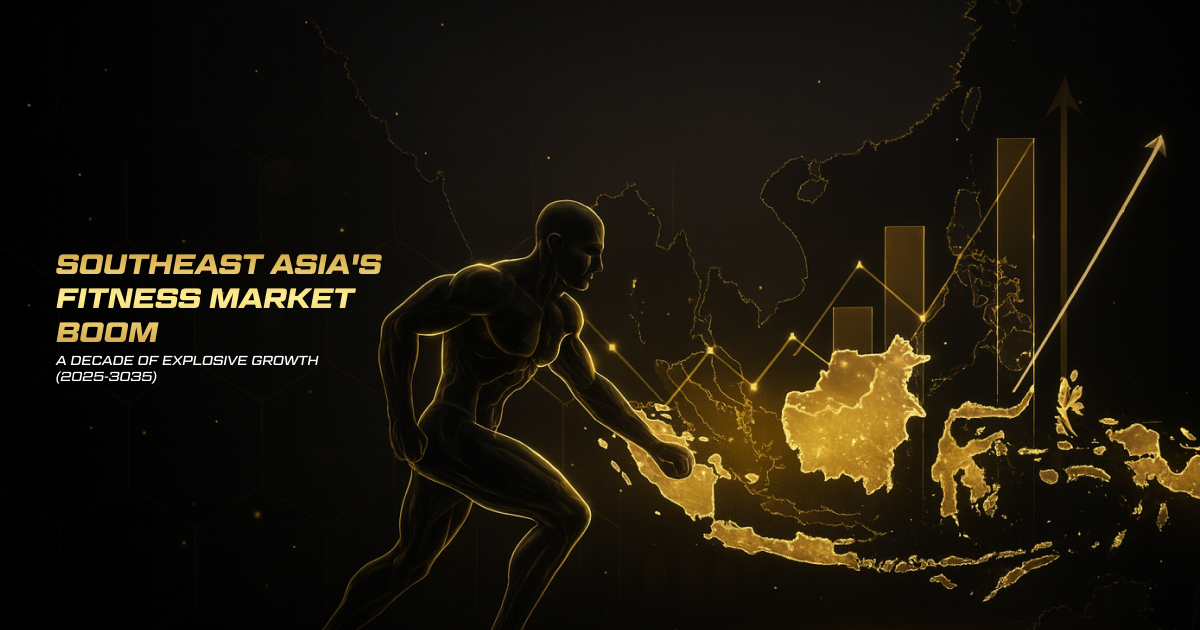
In the vibrant heart of Southeast Asia, where bustling megacities meet tropical paradises, the gym and fitness club industry is surging forward like never before. As of November 2025, the region’s fitness sector is a dynamic force, fueled by a young, urbanizing population and a cultural shift toward holistic wellness. Valued at USD 2.68 billion this year, the market is not merely rebounding—it’s exploding with innovation and demand. With rising incomes, smartphone penetration exceeding 80% in key markets, and a post-pandemic emphasis on preventive health, Southeast Asia’s fitness landscape is set to double in size by 2035. Backed by a robust compound annual growth rate (CAGR) of 9.35%, this $2.68 billion powerhouse could reach USD 4.19 billion by 2030, outpacing global averages. For entrepreneurs eyeing the ASEAN bloc—home to over 680 million people—this decade heralds a golden era of opportunity in sweat equity and smart tech.
.
Southeast Asia’s gym and fitness club market has transformed from niche urban enclaves to widespread accessibility hubs since the early 2020s. In 2025, the sector encompasses everything from no-frills HVLP (high-volume, low-price) chains in Jakarta to luxury wellness studios in Singapore, generating USD 2.68 billion in revenue. Membership numbers are climbing steadily, with an estimated 10–12 million active users across the region—a 15% increase from 2023 levels, driven by hybrid models blending in-person and app-based workouts. Indonesia and Thailand alone account for nearly 40% of this, with Vietnam and the Philippines close behind.
.
This foundation stems from demographic dividends: a median age of 30, urbanization rates hitting 50% by 2025, and smartphone ubiquity enabling seamless bookings. Post-COVID, “revenge fitness” has evolved into routine self-care, with facilities reporting 10–12% revenue growth in 2024–2025 despite inflationary pressures. Boutique studios, offering yoga and HIIT classes infused with local flavors like Muay Thai or Silat, now represent 25% of the market, while digital integrations boost retention by 20%. The Health & Fitness Association’s 2025 Global Report highlights Southeast Asia’s role in the Asia-Pacific’s 22 million club members, underscoring a resilient ecosystem poised for scale.
.
The outlook is unequivocally optimistic. Analysts forecast the Southeast Asia health and fitness club market to expand at a 9.35% CAGR from 2025 to 2030, ballooning from USD 2.68 billion to USD 4.19 billion. More ambitious estimates peg it at USD 4.58 billion by 2032, with gym memberships alone surging from USD 257.59 million in 2024 to USD 749.69 million by 2033 at a blistering 12.52% CAGR. Digital fitness & well-being segments will contribute significantly, growing from USD 2.54 billion in 2025 to USD 3.45 billion by 2030 at 6.35% CAGR.
.
These projections are anchored in macroeconomic tailwinds: ASEAN’s GDP growth averaging 5% annually, a burgeoning middle class of 350 million, and government initiatives like Thailand’s “Health 4.0” promoting active lifestyles. By 2035, the broader Asia-Pacific fitness equipment market—integral to clubs—could hit USD 44.11 billion, with Southeast Asia capturing 20–25%. For context, this growth rivals e-commerce booms, positioning fitness as a staple consumer spend in a region where health apps see 100 million+ downloads yearly.
.
What ignites this fire? Urbanization tops the list, with 60% of Southeast Asians projected to live in cities by 2030, demanding convenient, 24/7 facilities. Health consciousness follows: WHO data shows non-communicable diseases affecting 30% of adults, spurring 70% of new members to prioritize preventive wellness over aesthetics. Rising disposable incomes—up 7% in Indonesia and Vietnam—make memberships affordable at USD 20–50/month.
.
Technology is the accelerator. Wearables and AI apps lead 2025 trends, with 40% of users tracking via devices like Fitbit or local favorites. Hybrid models, blending Zoom classes with club access, have reversed digital fatigue, boosting attendance 18%. Holistic approaches—merging fitness with mental health via mindfulness pods—appeal to Gen Z (45% of joiners), while corporate wellness programs in Singapore and Malaysia tap white-collar demand. Sustainability adds momentum: eco-friendly gyms using bamboo equipment in Bali align with millennial values, potentially adding USD 500 million in premium revenue by 2030.
.
Southeast Asia’s growth is a tapestry of national narratives. Indonesia, the region’s behemoth with 270 million people, dominates with urban gyms proliferating in Jakarta and Surabaya. Its health & fitness market now fuels a 10.31% annual surge, driven by padel courts and Pilates studios catering to a fitness-curious youth. By 2030, expect 5 million members.
.
Thailand shines as a wellness tourism hub, with Bangkok’s studios blending Muay Thai and yoga retreats. The sector saw 2025 revenues up 12% on tourism rebound—40 million visitors fueling luxury clubs. Vietnam’s rapid urbanization in Ho Chi Minh City and Hanoi propels a 15% membership spike, focusing on affordable chains amid 6% GDP growth. Malaysia’s Kuala Lumpur buzzes with boutique HIIT and spin classes, capturing a multicultural crowd with 8% CAGR projections.
.
The Philippines emphasizes community-driven fitness post-typhoon resilience, seeing 20% growth in outdoor-urban hybrids. Singapore, the tech vanguard, leads in smart gyms—AI-coached sessions—with per-capita spend at USD 100/month, projecting 10% annual expansion. Collectively, these markets embody ASEAN’s 9.36% regional CAGR.
.
No boom is barrier-free. Affordability bites hardest: in lower-income spots like the Philippines and Vietnam, 40% dropout rates stem from USD 30+ fees amid 5–7% inflation. Market fragmentation—thousands of independents lacking scale—hikes operational costs 15%. Regulatory hurdles and digital divides persist, with only 60% app adoption due to rural-urban gaps.
Yet, solutions abound—micro-gyms, subsidies, and AI personalization could transform these hurdles into advantages.
.
Adapt or fade: 2025’s innovators wield AI trainers, VR Muay Thai, and gamified apps. Smart equipment and social-integrated platforms foster community across borders. Holistic hubs integrate nutrition, and sustainable designs resonate deeply. By 2030, blockchain-secured memberships could unlock regional roaming, adding USD 1 billion in value.
.
Southeast Asia’s gym and fitness club market isn’t just growing—it’s redefining vitality, from Jakarta’s high-rises to Singapore’s smart hubs, en route to USD 4+ billion by 2030. With 9.35% CAGR fueling this ascent, the decade demands bold bets on tech, inclusivity, and local flair. For investors, operators, or enthusiasts, ASEAN’s pulse is your cue: innovate, localize, and lead the wellness revolution. The region’s 680 million are waiting—what’s your play?
.
All data accurate as of November 2025.

Lorem ipsum dolor sit amet, consectetur adipiscing elit, sed do eiusmod tempor incididunt ut labore et dolore magna aliqua. Ut enim ad minim veniam, quis nostrud exercitation
2247 Station Street, Oakland, CA, California 94612
Copyright © 1997 – 2025 Binabadan.com. All Rights Reserved.
Please be informed that our Shipping Department will be closed for the holidays from 5th January to 11th January 2026.
Orders can still be placed as usual. All orders will be shipped starting 12th January 2026 onwards.
Stock Update:
Whey Depot 6lbs – Chocolate Flavour is estimated to arrive on or after 12th January 2026.
We appreciate your patience and continued support. Thank you for choosing Binabadan.com